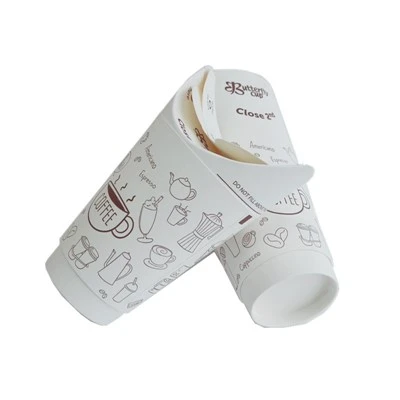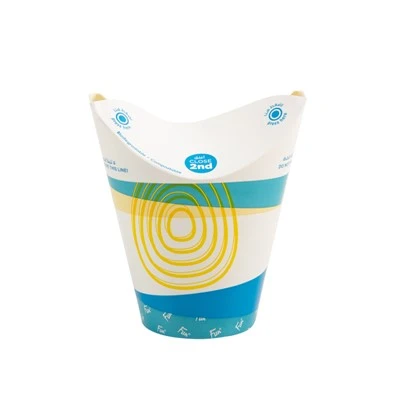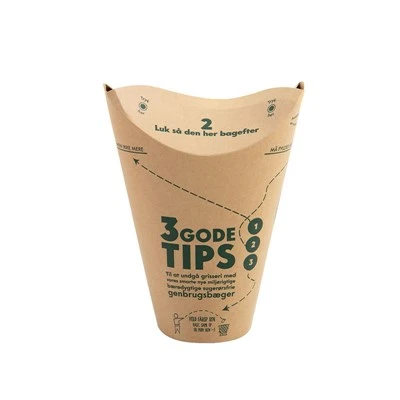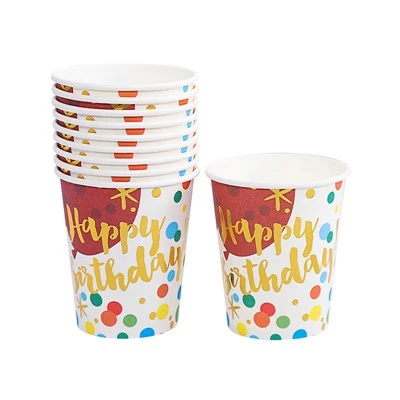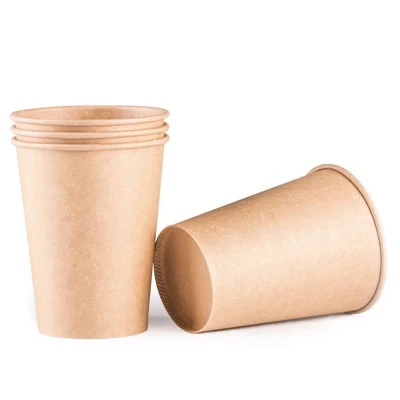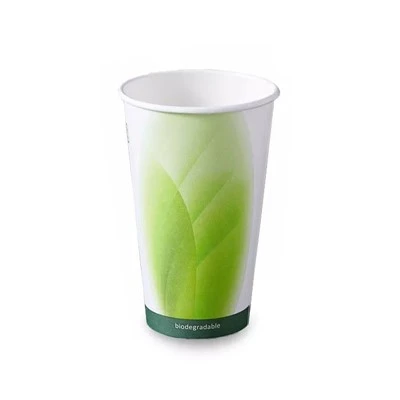
Standard Paper Bowls: These are the most basic type of paper bowl, typically made from single or multiple layers of paper. Their advantages include low cost and relatively good eco-friendliness; they are suitable for holding dry foods such as popcorn or nuts. However, standard paper bowls have poor water resistance; if used for soups or beverages, the liquid easily permeates the material, causing the bowl to soften and lose its structural integrity.
PE-Coated Paper Bowls: These bowls are created by applying a layer of polyethylene (PE) film to the surface of a standard paper bowl. This film provides excellent water and oil resistance, allowing the bowls to hold a variety of hot and cold beverages, soups, and other liquid-based foods. Additionally, PE-coated bowls offer greater structural strength and are less prone to deformation. Depending on the coating process, they can be classified as single-sided or double-sided coated bowls. Single-sided coated bowls usually feature the coating on the interior to hold liquids, whereas double-sided coated bowls are coated on both the inside and outside; the latter offers superior water and oil resistance, making them ideal for food delivery and takeout applications.
Wax-Coated Paper Bowls: These bowls are produced by applying a layer of paraffin wax to the paper surface. Paraffin wax effectively prevents moisture penetration, giving the bowls good water-resistant properties. However, a significant drawback is their lack of heat resistance. When holding high-temperature foods or beverages, the wax can melt; this not only compromises the bowl's usability but may also pose potential health risks. Consequently, wax-coated paper bowls are generally suitable only for cold beverages.